Roof rat structural exclusion establishes a permanent mechanical barrier against Rattus rattus, a non-native climbing rodent that leverages dense citrus trees, queen palms, and oleander hedges in Maricopa County to…
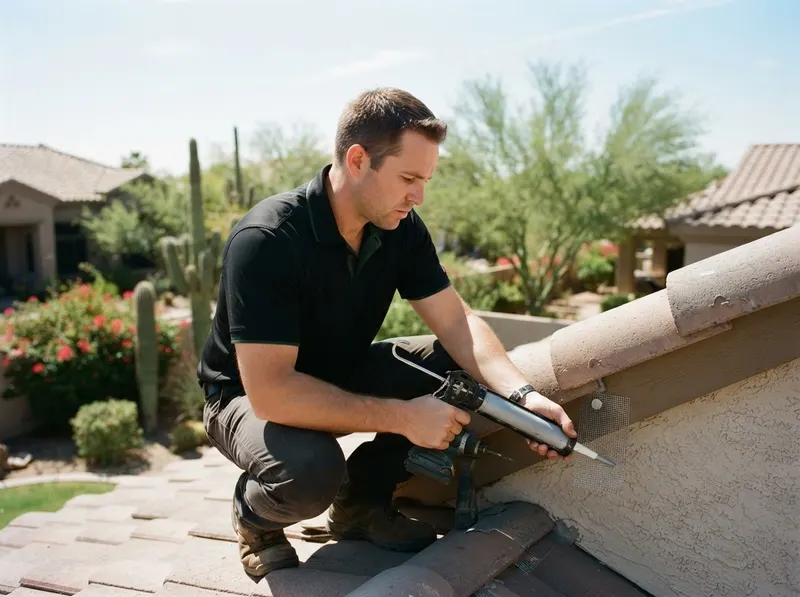
Roof rat structural exclusion establishes a permanent mechanical barrier against Rattus rattus, a non-native climbing rodent that leverages dense citrus trees, queen palms, and oleander hedges in Maricopa County to reach elevated roof lines. In mature communities such as McCormick Ranch and Gainey Ranch, flood irrigation and established fruit canopies generate dense rodent populations that migrate directly onto barrel-tile roofs. Standard pest control protocols rely on exterior poison bait stations, which leave structural entry points open and create risks for domestic pets that encounter secondary toxicants. Structural exclusion instead targets the physical architecture of the home, closing gaps larger than 0.25 inches with galvanized 19-gauge steel hardware cloth, elastomeric sealants, and metal flashing to render the roof perimeter impenetrable.
Tile-roof architecture in North Scottsdale communities like DC Ranch, Silverleaf, and Troon North presents specific mechanical vulnerabilities where concrete barrel tiles meet the fascia board. Known as bird stops or eave closures, these curved openings allow rodents direct access into the sub-tile airspace, where temperatures remain moderate and nesting materials abound. Exclusion work seals these roof-to-fascia transitions, secures attic dormer vents, caps plumbing vent stacks, and covers high-elevation HVAC chases near parapet walls. Properties bordering natural desert terrain near the McDowell Sonoran Preserve and Pinnacle Peak also encounter wood rats and pack rats; structural exclusion seals these identical roof-transition access routes without placing hazardous poisons near protected desert wildlife.
When evaluating rodent control strategies, structural barrier exclusion fits homeowners who require a permanent physical barrier rather than indefinite chemical treatments. The operational trade-off requires upfront expenditure for specialized roofline carpentry and masonry modifications rather than low-cost initial baiting. While standard baiting traps an active population over several weeks, it does not prevent secondary colonies from colonizing the vacated attic insulation. Completing structural exclusion before running interior trapping programs ensures that trapped rodents cannot be replaced by outside individuals foraging along adjacent utility lines.
Every job gets a firm, written price after a free on-site visit.
Tell us about your roof rat structural exclusion job in Scottsdale and we'll send a clear, written quote, usually the same day.
 Torvani Pest Defense